
In this article
1. What is red light therapy – and what does the light do?
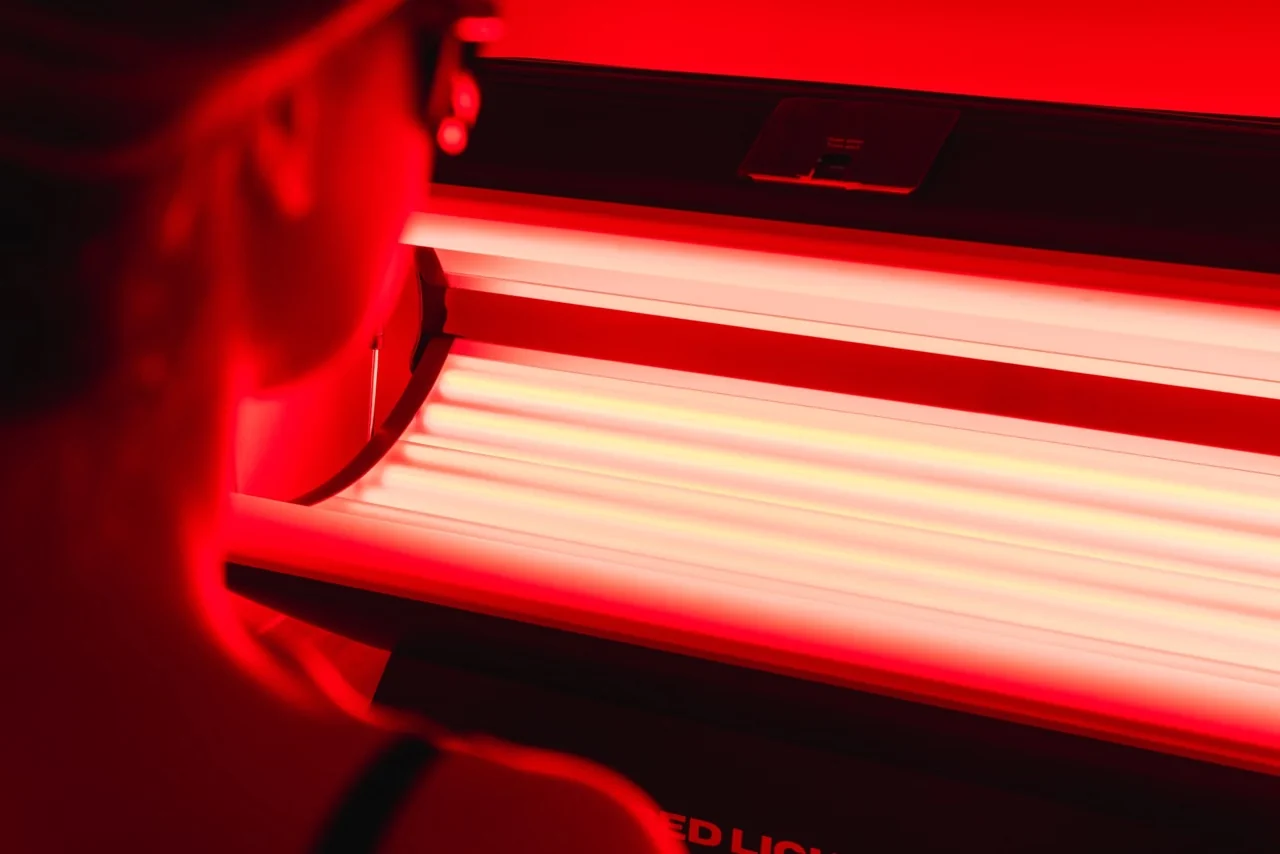
Red light therapy is a treatment in which the skin is exposed to red and near-infrared light from sources such as LED panels or a red light therapy bed. The light can be absorbed by light-sensitive molecules in the tissue and influence cellular activity. The method is called photobiomodulation, abbreviated to PBM.
One of the mechanisms researchers are investigating is how light affects mitochondria, the energy-producing parts of cells, and the signals that govern cellular responses. This explains the interest in the method in areas including skin, pain and recovery. The starting point is the biological effect of light; a session is not the same as warming the body in a sauna.
Research into red light therapy uses specific wavelengths, irradiance levels, treatment times, areas and treatment intervals. That is why you need to know more than whether a device emits red light. You need to understand the values it delivers and how they are used together. Read more about mechanisms and treatment parameters in research.
2. Which wavelengths should you look for?
Start by checking which wavelengths the equipment uses and whether they suit the treatment protocol you want to offer. Wavelength is measured in nanometres, nm, and affects how light is absorbed and scattered in tissue.
- Red light, for example 633 and 660 nm, is visible to the eye and is used in areas such as skin research.
- Near-infrared light, for example 850 and 940 nm, is invisible to the eye. Its interaction with tissue differs from that of red light. How deeply the light reaches depends on both the wavelength and the tissue; a higher nm value does not automatically mean deeper penetration.
Red Light Solo, Red Light Pod and Red Light Pod Pro combine 633, 660, 850 and 940 nm. When comparing systems, you should also ask how the light output is distributed across the wavelengths. Four wavelengths tell you which types of light are present, but not how much of each reaches the skin.
3. What is irradiance – and how high does it need to be?
Irradiance is the light power reaching a given surface area, usually expressed in mW/cm². It helps you calculate how much light energy the skin receives over a given time. The electrical power rating in watts, by contrast, describes the device’s electricity requirements.
There is no single irradiance value that is best for every purpose. A useful value must be linked to a documented treatment protocol and measured at the distance where the body will actually be positioned. Ask for the measurement distance, instrument, settings and readings from several points across the treatment area.
Examples from our models: Red Light Pod lists 40–60 mW/cm² in its technical specifications, and Red Light Solo lists 129 mW/cm². These values show why time needs to be considered alongside irradiance. For a fair comparison, the measurement conditions must also be comparable.
A high reading taken at the centre of a panel cannot, on its own, describe the light across the whole body. Ask about both intensity and distribution, not just a maximum reading at a single point. Explore the difference between irradiance, rated power and LED count.
4. How do you calculate the light dose?
The light dose per unit area is calculated by multiplying irradiance by time. When irradiance is given in mW/cm², divide by 1 000 to obtain the dose in J/cm².
The dose formula
Dose (J/cm²) = irradiance (mW/cm²) × time (seconds) ÷ 1,000. With time in minutes: dose = irradiance × minutes × 0.06.
Worked example: At a constant irradiance of 50 mW/cm² for 10 minutes, the dose is 50 × 600 ÷ 1 000 = 30 J/cm². Over 20 minutes, it is 60 J/cm². 50 mW/cm² falls within Red Light Pod’s specification range, but this example is a calculation, not a treatment recommendation.
The formula describes incident light energy at the surface where irradiance is measured. It does not show how much of the dose is absorbed by a muscle or other deeper tissue. For pulsed light, use the time-averaged irradiance, not just the peak value when the light is on.
The same number of J/cm² can also produce different biological responses if the wavelength, irradiance or timing differs. Use the formula to understand and check a protocol, not to select a universal dose yourself. This relationship is explained in the research review on light parameters and effects.
5. Does the number of LEDs matter?
Yes. The number of LEDs, their positioning and their optics affect how the system can distribute light across the treatment area. More light sources can be used for greater coverage or closer spacing. But LED count is not, in itself, a measure of dose or treatment outcomes.
Our models clearly illustrate the difference: Red Light Solo has 9 600 LEDs in an adjustable panel. Red Light Pod has 28 512, and Pod Pro 41 600, with light from both above and below. The light sources in the beds therefore need to cover a different geometry from those in the standalone panel.
That is why you should consider three pieces of information together: how many light sources the system has, how large an area they illuminate and what irradiance reaches the body. LED count, wavelengths and irradiance each serve different roles. None of these specifications replaces the others.
6. Panel or red light therapy bed – which should you choose?
Choose a panel when flexible positioning matters most. Choose a bed when you want to expose the front and back of the body during the same lying-down session. The difference lies in how the treatment is delivered, how the body is covered and how much space the equipment takes up.
Red Light Solo: flexible positioning
Red Light Solo has 9 600 LEDs, electric height adjustment and 360° rotation. Its dimensions are 184.6 × 96.3 × 111.1 cm. It suits a setup where the panel is positioned to suit the customer and treatment area. Allow space for the treatment couch, the customer and the panel’s movement too.
Red Light Pod: above and below at the same time
Red Light Pod has 28 512 LEDs and measures 192 × 88 × 95 cm. The customer lies between two illuminated surfaces. This makes it possible to expose the front and back of the body during the same session without moving a panel.
Red Light Pod Pro: a larger bed format
Red Light Pod Pro has 41 600 LEDs and measures 227.5 × 123.5 × 112.5 cm with the lid closed. It weighs 380 kg and requires a dedicated 40 A circuit according to the model’s electrical requirements. Check the available space, access for delivery and electricity supply before making your decision.
Pod and Pod Pro require at least 50 cm behind them and 20 cm at each short end, plus space in front and for opening the lid. Product dimensions are therefore not the same as the minimum dimensions of the finished room.
7. How long should the sessions you offer be?
Start with the documented protocol for the equipment and its intended use. Then plan the booking time around the session. Higher irradiance or longer exposure is not automatically better; the dose needs to suit the purpose.
A practical scheduling example: if the chosen session takes 20 minutes and you allow 10 minutes for changeover and cleaning, the booking slot is 30 minutes. Three available hours will then accommodate six visits. A new customer may need extra time for an introduction.
Make the routine easy to repeat: the same body position and distance, clear settings, a review of safety instructions and eye protection, and a defined cleaning procedure between customers. Also decide who the customer should contact if something feels wrong.
8. What should you get answers to before buying?
You should be able to describe both the light delivered and how a customer visit will work. Use this list when comparing options:
- Which wavelengths are used, and how is the light distributed between them?
- What irradiance reaches the body, at what distance and with which settings?
- How large an area is illuminated, how evenly and from how many directions?
- Which session times and instructions for use apply?
- Is there enough space on the premises for the unit, the customer, staff and delivery access?
- What is included in training, installation, warranty and support?
Then assess the financial viability of the offering: what price will the customer pay, how many visits are needed and how much staff time is required? Our gym guide helps you shape the service, and the calculation guide shows you how to work out the figures.
Book a consultation or request a quote, and we will compare the models based on your premises, your offering and how you want to work.