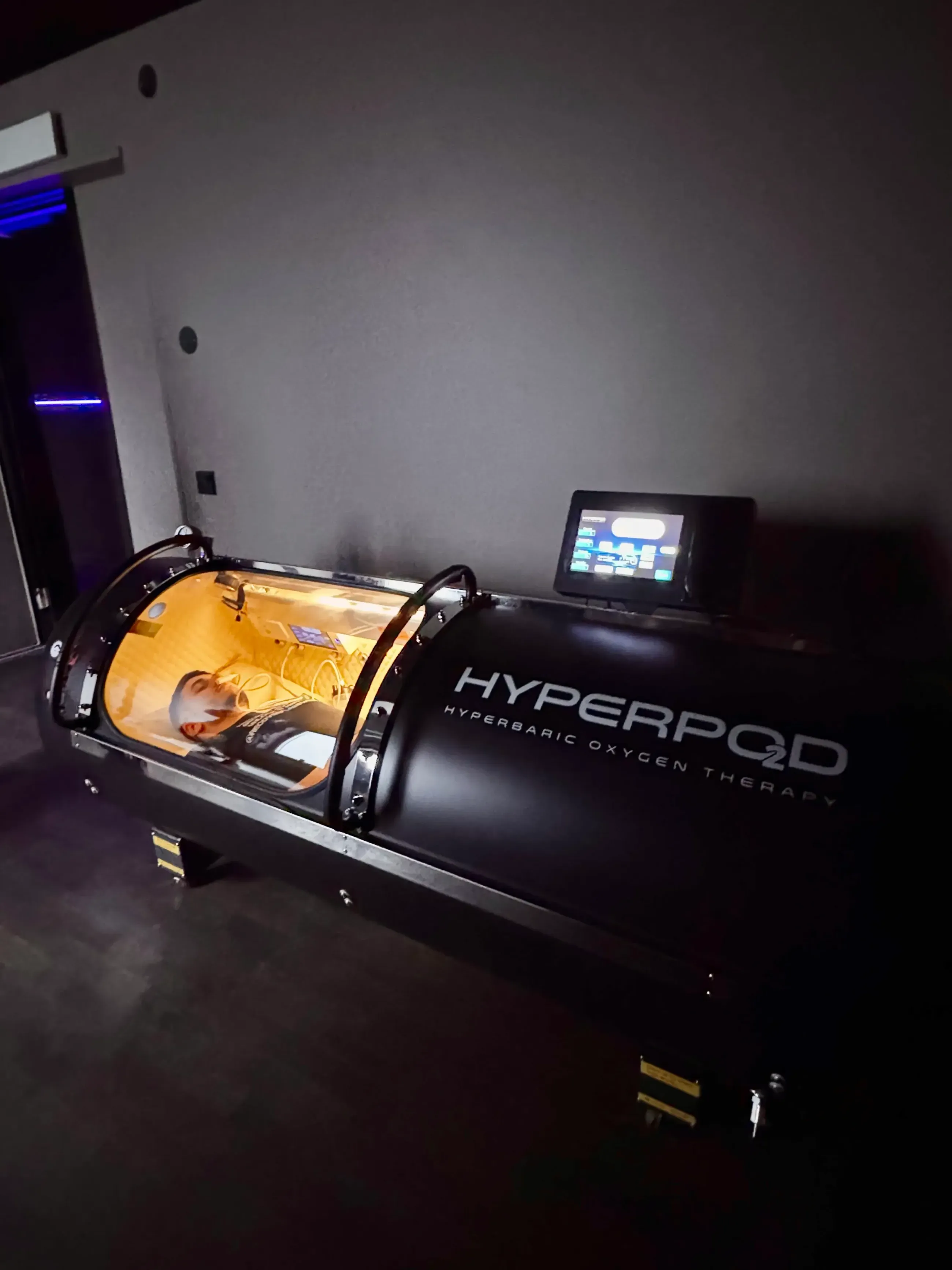
What does the research show in brief?
Think of the telomeres as the plastic tips of shoelaces. Each time the cell divides, the tip becomes a little shorter. Once it's gone, the cell stops working properly -- and that's a big part of what we call aging. Telomere shortening is also counted as one of the established markers in the modern hallmarks of aging.
What made HBOT interesting is that a human study in Ageing showed that HBOT in healthy older adults was linked to longer telomeres and decreased levels of certain senescent immune cells After 60 treatments.
The result after 60 HBOT sessions? Longer telomeres. Fewer end-of-life cells. Better blood flow to the brain. It is not a promise of eternal life. But it is one of the most high-profile indications yet that a treatment may actually affect biological markers linked to how the body ages.
What is biological aging?
Ageing is not just a matter of years. At the cellular level, it is driven by several processes, but two of the most central are the shortening of telomeres — the protective structures that sit at the ends of our chromosomes — and the accumulation of senescent cells, that is, cells that have stopped dividing but are still present in the body and can contribute to chronic low-grade inflammation. Both telomere attrition and cellular senescence are today counted as central processes in research on biological aging. Read more in Cell's overview of the hallmarks of aging.
The more such cells, and the shorter the telomeres, the more the body is linked to biological wear and tear over time. This is also why these markers have become so important in longevity research. They don't say everything about aging, but they do say something about how the body changes in depth.
Why is HBOT relevant in the anti-aging conversation?
HBOT is relevant in the field of longevity because treatment is not just about recovery after exercise or injury. When the body is exposed to oxygen under elevated pressure, the amount of dissolved oxygen in plasma changes, and that in turn can affect tissues, microcirculation, and cellular processes in a way that ordinary breathing does not. Review literature on HBOT and aging biomarkers also describes that the therapy is relevant in conversations about tissue repair, vascular function, and biological aging. See, for example, the review in Frontiers in Aging.
This is precisely where HBOT becomes interesting in the anti-aging conversation: not just as recovery, but as a treatment that potentially affects markers such as telomere length, senescence and blood flow to the brain.

What does the research show at the cellular level?
In the study that was later highlighted by ScienceDaily examined healthy older adults who underwent 60 HBOT sessions over 90 days. The researchers reported that telomere length increased in several immune cell types, with the greatest changes in some subpopulations, and that the proportion of some senescent T cells decreased significantly. In the ScienceDaily summary, increases in 20-38% in telomere length depending on cell type, as well as reductions in 11— 37% in senescent cells.
It is this part of the research that has made HBOT so much attention in the context of longevity. At the same time, it's important to be thorough: these are still a limited number of studies, and the results need to be replicated by more independent research teams before overly far-reaching conclusions can be drawn.
How does HBOT work?
The mechanism behind it is fascinating. During an HBOT session, the body alternates between very high oxygen levels and more normal levels. This is believed to be able to trick the body into activating certain repair and adaptation systems, even though it is not in actual oxygen deprivation. It is usually described as hyperoxic-hypoxic paradox. Review literature describes how HBOT may be relevant for angiogenesis, vascular function, cerebral perfusion and tissue repair, among others.
It is still an area under development. But it is precisely the combination of high pressure, high oxygen and repeated exposures that makes HBOT biologically interesting.
HBOT and the Brain
It does not stop at blood cells. In the Cognitive study from the same research track, improvements were reported in attentiveness, information processing speed and executive function in healthy older adults after HBOT, accompanied by improved cerebral blood flow. ScienceDaily also mentions that the research team previously demonstrated improvements in age-related brain function.
That makes HBOT relevant even in the conversation about brain aging. Not as a promise of rejuvenation, but as a therapy in which there are published data linked to microcirculation, cognition and functioning in older adults.
What does this mean for you who offer HBOT?
For clinics, health studios and longevity businesses, this means that HBOT can no longer be simply communicated as recovery or general well-being. There is now research that places the therapy in a larger biological context -- where markers such as telomere length, cellular senescence and cerebral blood flow comes into the picture.
The best way to communicate this is not to promise “anti-aging” in an absolute sense. It is to be clear that HBOT is one of the few clinically used treatments that in early human research has shown measurable effects on biological markers linked to aging. It is both stronger and more credible
Want to know more about our HBOT solutions?
Want to know more about how HyperPod or HyperPod Pro fits into your business? Book a free consultation today!


%20(9).webp)
Time for an upgrade?
Scandinavia's trusted partner for world-leading recovery and longevity technologies.